
Contact Us
Email: hello@thevelvetprinciple.co.uk

For any public facing building, whether it’s a shopping centre, hotel, restaurant or leisure attraction there will be spaces that are designated for staff only. These are the engine rooms – where food is prepared, services are housed, supplies are stored and operations managed. It’s where the everyday activities go on that help deliver the magic and make places work.
There are many reasons for wanting to prevent public access to the back of house. Not least, security, safety and ensuring guests don’t get in the way of service delivery. As working environments, they will be designed with practicality and easy maintenance in mind. So will have a distinctly different feel to the carefully curated front of house experience targeted at guests.
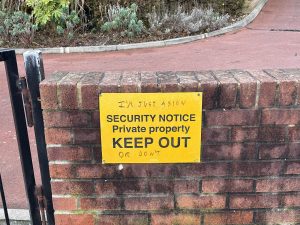
Access control mechanisms or keeping doors locked are one way for preventing unwanted entry. However, where staff require barrier-free access between guest and staff spaces, signs often do the heavy-lifting. By virtue of their purpose – to prevent certain actions, the language and symbols used is not particularly welcoming. When you’ve invested in making a place as inviting as possible and encouraging your guests to explore, these prohibitive signs don’t sit comfortably. Increasingly clients, especially those within the leisure and hospitality sector, want more sympathetic solutions.
There are a range of potential design solutions – spanning the overall spatial arrangement through to the design of individual elements. For example:
Then there are more operational ‘security by design’ solutions, such as locating a concierge or greeting station close by, to put off bad actors from gaining entry, or to guide bone fide visitors from straying into staff only areas.
Without explicit prohibitive or restriction signs, it can make challenging members of the public who enter back of house spaces, more difficult. Should any injury be sustained through unauthorised entry, the lack of warning or prohibitive signs could have serious consequences. As such signs still have an important role in delineating between front and back of house.
However, these signs don’t need to look like they’ve come out of a Health & Safety catalogue (that typically make extensive use of the colour red and use very direct instructional, messaging) – unless of course, there is a health and safety imperative. Creating a unique design and using language that reflects the tone of voice of the brand or experience, will help lessen the starkness of the message. But, ideally signs should be used in conjunction with other design approaches, that minimises their visibility to all but the determined transgressors.
Email: hello@thevelvetprinciple.co.uk